
No smart home needed. myIO is a universal controller: if all you want is heating, you get a full-featured heating and cooling controller that you can freely expand later. Your electrician installs it, and it quietly does its job. If one day you want to connect the lighting, the blinds or the solar panels too, the same controller handles it, without a new system.
Zone by zone, not house by house
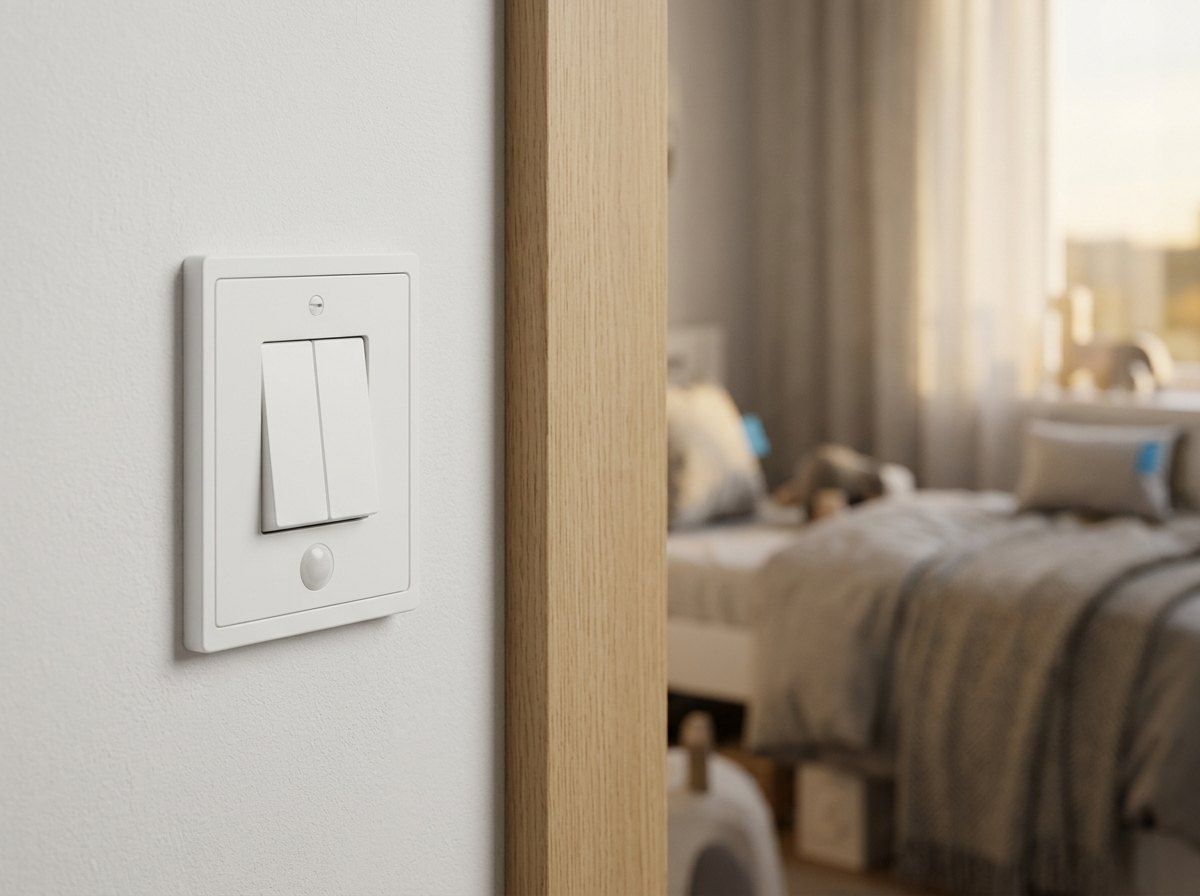
A temperature sensor measures every room. It fits in the light switch box, so you do not see it on the wall. myIO switches the valve or actuator of each zone separately, and heats only where it is needed. That is why you need no room thermostats, and no expensive, complicated multi-zone controller.
A room can have several circuits: floor, ceiling, radiator or infrared panel. All of them follow the same sensor.
Heats, cools, and knows when to switch
The same setup works for heating and cooling. You can set different temperatures for times of day, weekdays and weekends, and the timer can follow sunrise or sunset too. You switch between saved setups (for example winter, summer, away) on a schedule or with one tap.
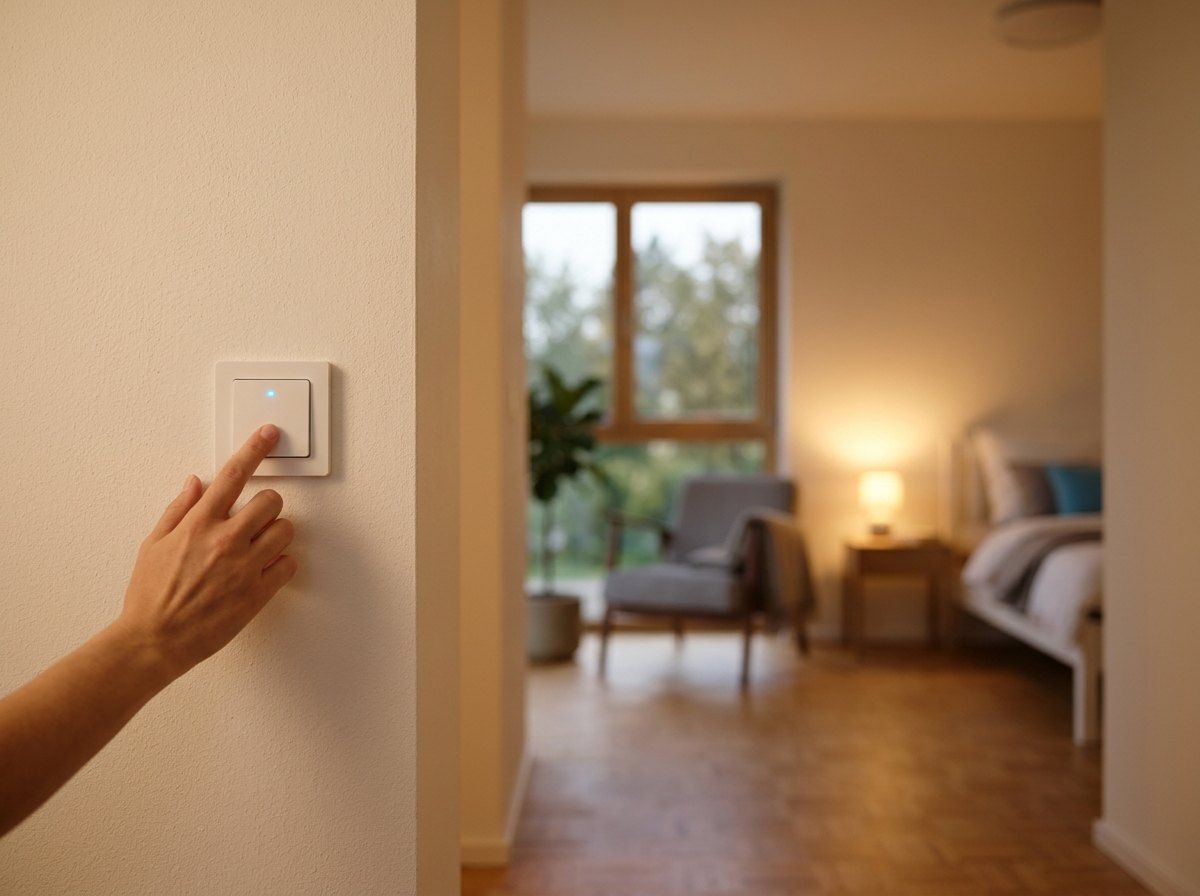
If you feel cold, you do not have to wait for the automation: the wall push button turns on the room’s heating right away, like a light (within the set limits). A small indicator light on the switch shows whether the heating is running.
Self-learning heating: MIA coming soon
MIA (myIO Intelligent Assistant) keeps learning your home’s heat loss and thermal inertia. From this it knows when to start heating early, so the room reaches the temperature you want by the time you set, and when to switch in time, so the thermal inertia of the floor or ceiling causes no overshoot or undershoot. When you air a room, it recognises the open window and, if you wish, pauses that room’s heating meanwhile. It is coming to V4 GIGA and V4 Opta; it is not available on myIO Server V3.
During development we measured on the controller how much more precise it is: MIA in practice: before and after.
Working with your boiler, pumps and heat pump
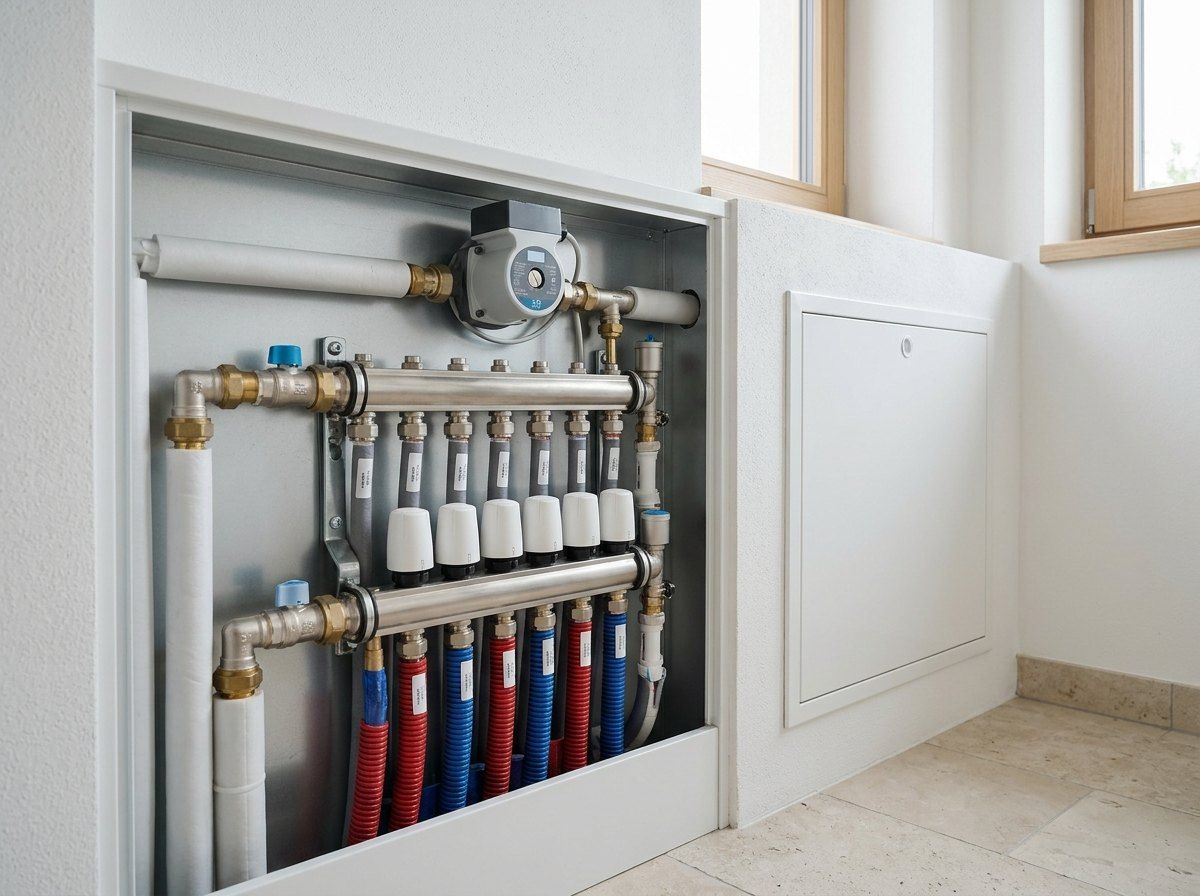
myIO signals the boiler or the heat pump through relays and switches the pumps. When any circuit of a manifold starts heating, its pump starts by itself, and it stops when every circuit is off. Thermal actuators need time to open (about six minutes), so the pump start can be delayed.
When water circulates continuously in the floor or the ceiling, myIO controls the water temperature with a motorised mixing valve: if the room asks for a little heat, the valve opens a little; if it asks for a lot, it opens more. The surface warms and cools evenly.
With a solar surplus, myIO can also switch on heating circuits, so the house stores solar energy. With a heat pump, it can use the SG-Ready signal on a schedule to tell it when heating more is worth it, for example in the cheap-electricity hours. Read more on the Energy and solar page.
Video: controlling a motorised mixing valve with myIO (YouTube, in Hungarian).
Protection: dew point and overheating
With ceiling or floor cooling, moisture can condense on the cold surface. myIO’s dew-point protection stops cooling before that happens.
For ceiling cooling we recommend the myIO DewPoint module: it senses the risk of condensation right at the cooled surface, in the plaster, mixes warmer water or blocks the circuit. It also works on its own, without a myIO Server.
When heating, the heating and cooling lockout keeps watch: for example, it does not let the floor get warmer than a set temperature, whatever the room temperature is.
For renovations too: with Wi‑Fi thermostats
When renovating, it is often impossible to run cables to the rooms. Computherm Wi-Fi thermostats work well here: myIO controls them directly, without the cloud or the internet. A value set on the thermostat shows up in myIO, and the other way round.

However suits you
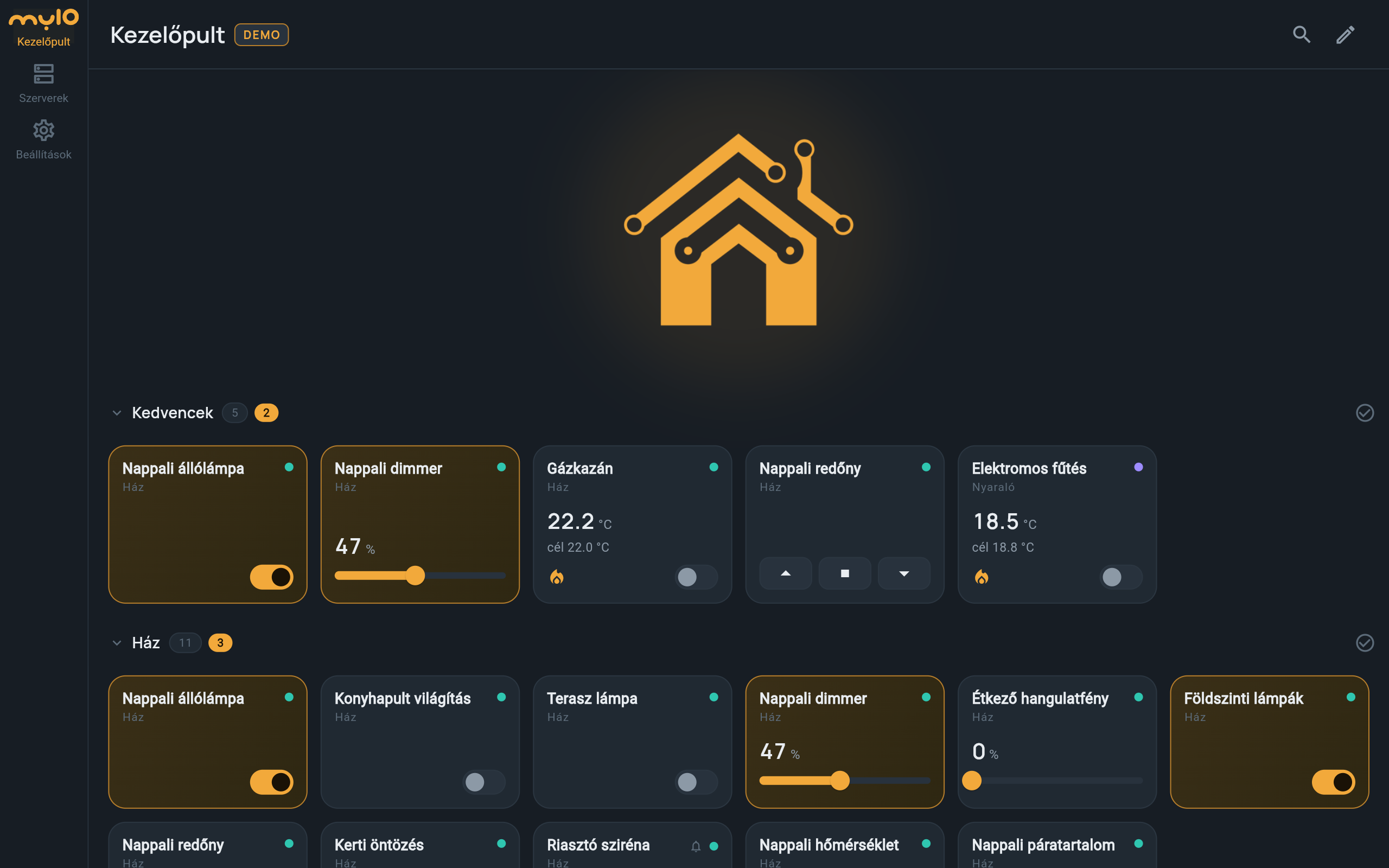
You control it from the app, the browser, the wall buttons, or with voice control in Hungarian on Android. myIO also works with Home Assistant and Homey.
You can also talk to your home through an AI assistant: ask how warm the kids’ room was last night, ask it to raise the living room temperature, and let it help with the setup. It reaches everything myIO can do.
For professionals
- Temperature sensors: digital DS18B20 on a 1-Wire bus, recommended cable YStY. V3 and V4 GIGA: 4 separate 1-Wire buses on the main board, up to 40 sensors. V4 Opta: the sensors connect through the Expander 16.
- Humidity: DHT sensors (V3 and V4 GIGA: up to 8).
- On relays: zone valves, pumps, thermal actuators, the start signal of the boiler or heat pump.
- Control: sensor-driven output with on and off values adjustable to a tenth of a degree. The order of the two values decides whether the circuit heats or cools (hysteresis); between them the circuit can be switched by hand.
- Mixing valve: mixer mode with a PWM output (0–255), converted to a 0–10 V signal at the valve. The minimum and maximum position, their temperatures and the controlling sensor can be set.
- Pump coupling: group the circuits of a manifold and attach the pump to the group, with an optional start delay.
- Heating and cooling lockout: a virtual output in cooling mode (for example floor 28/27 °C), as the first member of a lockout pair with priority, blocks the heating circuit.
- SG-Ready: any two relay outputs can be assigned as the SG pair. Four modes; the blocking (utility lock) mode is time-limited, by default to at most 2 hours.
- AI assistant: connects through MCP (Model Context Protocol) and reaches every myIO function: it reads, switches and configures.
- Computherm: discovery on the local network. If a thermostat stops updating, its circuit switches half of the time, so it never gets stuck on or off. The hysteresis on myIO can be set to ±0.1 °C.